
How to Reuse Workshop Offcuts and Cut Fewer Sheets
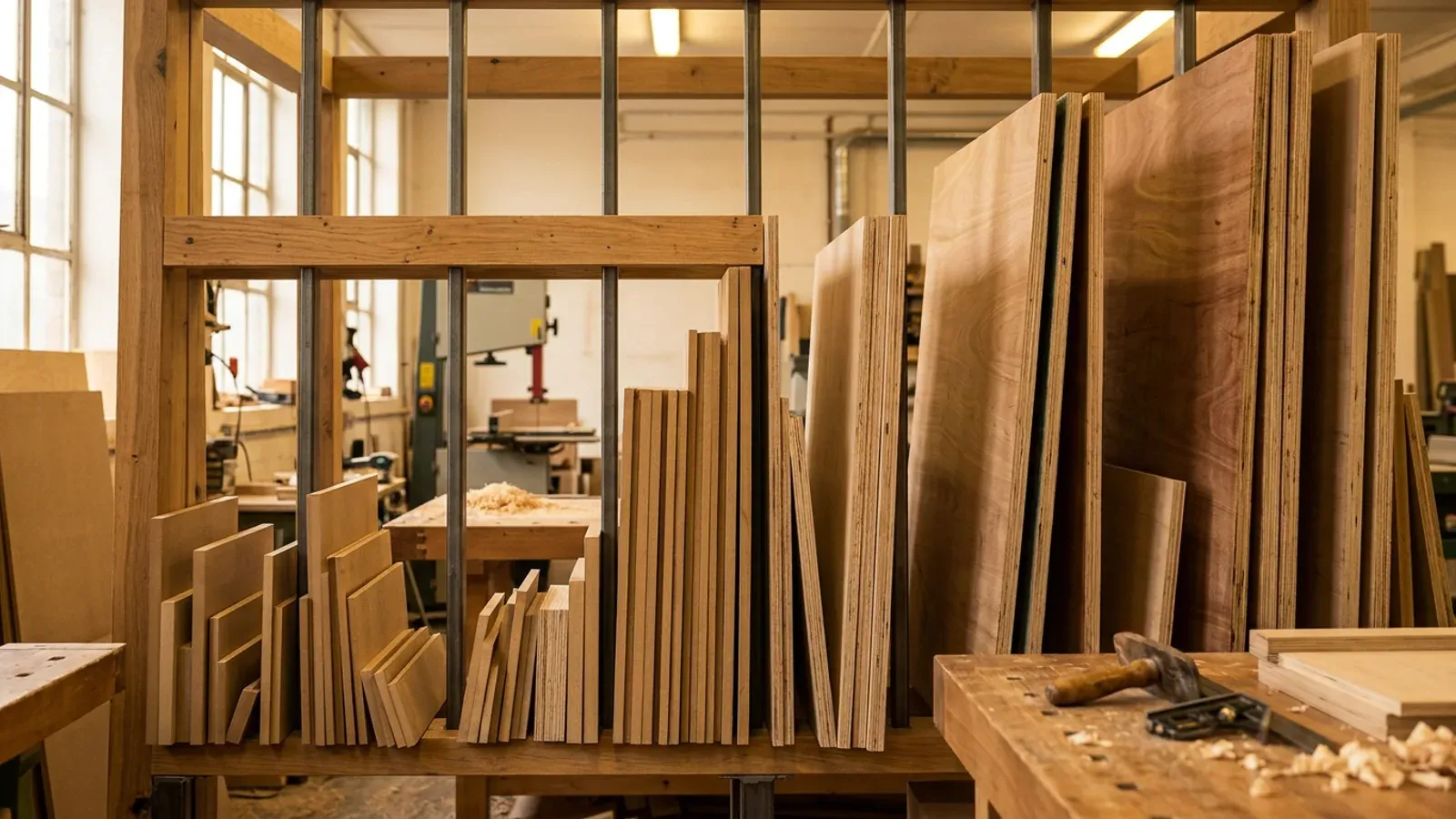
Every shop has the pile: the leaning stack of half-sheets and long strips behind the door that you cannot quite throw away and never quite use. It is money standing on its edge, and it is quietly funding your next order of full boards. Reusing offcuts is the cheapest material you will ever cut, but only if you can find the piece, trust its size, and remember it exists when you plan the next job.
Why do so many usable offcuts end up as scrap?
Most offcuts become scrap because nobody can find or measure them when it matters. A good half-sheet gets stood in a corner after a kitchen, its size lives only in the memory of whoever cut it, and three weeks later you order a full board rather than dig through the pile to check. The waste is not the cut that made the offcut. It is the fresh sheet you buy because the offcut had no label, no recorded size, and no place on the next cut list.
The second reason is trust. An offcut you are not sure about is worse than useless, because you will measure it twice, doubt it, and reach for a full board anyway to be safe. A pile you cannot rely on is just clutter that makes the workshop smaller. The fix is a system simple enough that you actually keep it up.
What is the simplest system for storing offcuts?
The simplest offcut system has three parts: a size threshold, a label, and one place. Decide the smallest piece worth keeping, mark every keeper with its dimensions, and store them all in one rack so there is a single place to look. Anything under the threshold goes straight in the bin, because a rack full of slivers you will never cut from is as bad as no rack at all.
Set the threshold by what you actually make. If your smallest common part is a 300mm drawer front, a piece that cannot yield one is scrap, so bin it and keep the space for boards that will earn it. Write the width and length on the face of each keeper in marker the moment it comes off the saw, while you still know the grain direction, and stand it in the rack by rough size. Ten minutes of discipline at the saw saves an hour of measuring later and a full sheet you did not need to buy.
How do you actually cut from offcuts on the next job?
You cut from offcuts by checking your offcut stock before you order boards, then letting the small parts land on leftovers you already own. When you plan the next job, look at what is in the rack first and place the parts that fit onto those pieces, so full sheets are only bought for what genuinely needs them. Do it in that order and the pile shrinks instead of growing.
This is the step a cut list optimiser makes painless. Cutzilla flags the keepable offcuts each job produces and records their sizes, so leftover board re-enters the next cut list as real, sized stock instead of a guess. You can see how offcut detection fits the wider workflow on the features overview, or read how Cutzilla turns leftovers into tracked inventory on the offcut management page.
Does reusing offcuts really move the numbers?
Yes. An offcut is board you have already paid for, so every part you cut from one is a part you did not buy a fresh sheet to make. Across a year of carcasses and drawers that is real money that never left the workshop, on the same jobs and the same saw. The material was always there; you were just throwing it out before you used it.
There is a smaller, quieter win too: tighter layouts leave fewer, larger offcuts in the first place, which are the ones worth keeping. Planning the whole job before you cut, with kerf and grain accounted for, turns scattered slivers into a few usable boards. You can try that on the free sheet cutting calculator and see the size of the leftovers change.
Try it free. Cutzilla flags your keepable offcuts and optimises your cut list in the browser, with no install on any device. Start free.
Want your offcuts kept as tracked stock you pull from on the next job? Join the Pro waitlist.